
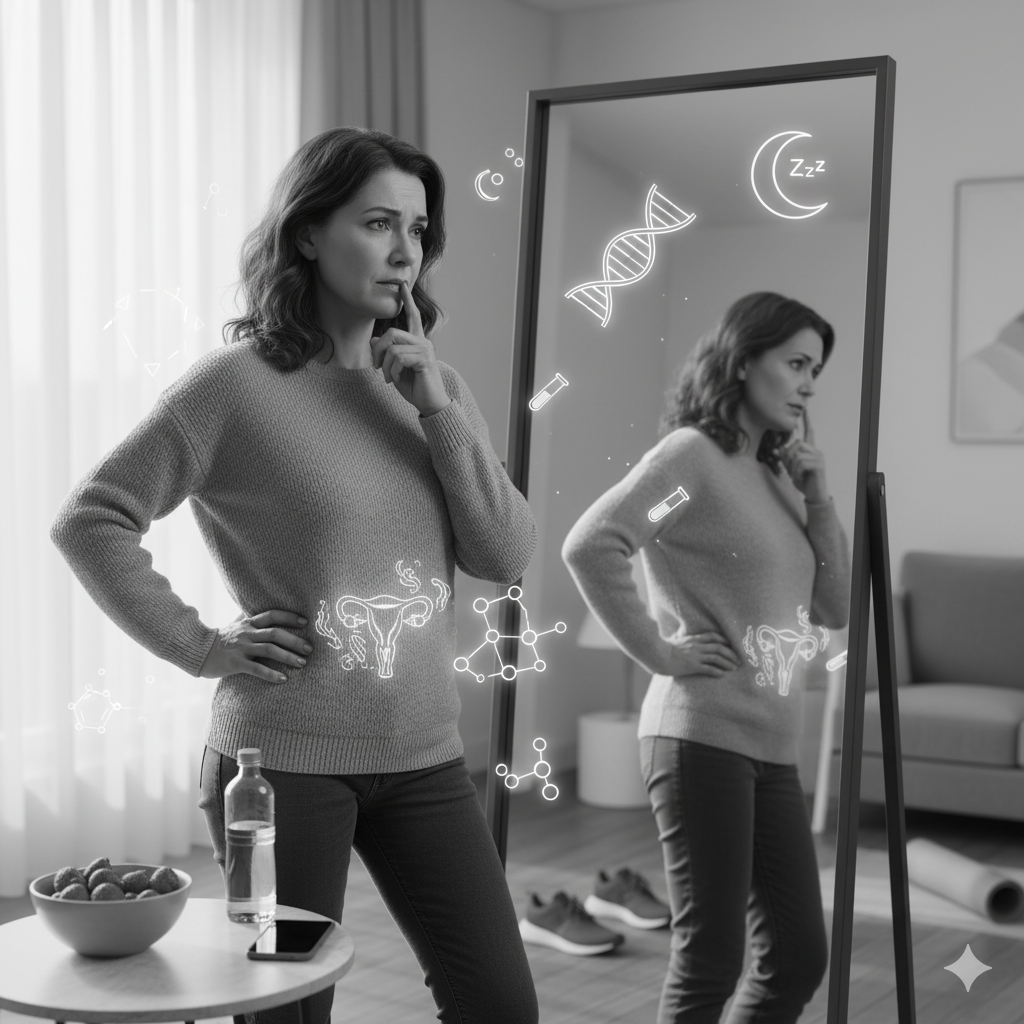
Body Dysmorphia in Perimenopause and Menopause
Did you know that body dissatisfaction peaks in puberty and then again in perimenopause?
What both of these transitional periods have in common is massive hormonal changes. On top of all the other symptoms associated with these life stages, it can be frustrating, deflating, and defeating for women to hate the way their bodies look.
In perimenopause, your body may look and feel different in clothes and in the mirror, with adipose tissue distributed in areas it never has before – such as the butt, belly, hips, thighs, bust, and underarms—along with a decrease in muscle tone and definition. Overall, you may feel softer, puffier, and less toned.
Unfortunately, these changes often feel like they’re happening for no apparent reason, because your diet, lifestyle, and exercise routine haven’t really changed.
These hormonal shifts are very real, very common, and very normal. But even though these changes are to be expected, that doesn’t mean they’re welcome or easy to accept- especially when we’re working so hard to maintain our diets and physical activity levels.
I hear many women (and men) say they “hate” or “don’t recognize” their bodies at these stages. What a terrible feeling, in any phase of life, to have about your body. Not only is it detrimental to your mental health, but it also puts you at risk for an eating disorder.
While you may not be able to control the size of your jeans, you can control your outlook and how you choose to show up for your body. Your weight may change, but your self-worth doesn’t. A number on a scale could never reflect who you truly are.
Don’t tie your self-confidence to an external standard influenced by hormonal changes beyond your control. If negative self-talk starts to creep in, recognize it as a possible symptom of these fluctuating hormones.
What I find helpful is understanding what’s happening internally during this transition. In the following section, I’ll explain these hormonal shifts and how they affect weight. Once you understand how hormones work, you can choose more effective coping tools.
Mood and Sleep Hormones
The number of people coming to see me for hormone-related weight gain has exploded in recent years. Most attribute their rising weight to perimenopause or menopause—and yes, that can be a factor.
But it’s important to note that it isn’t just declining sex hormones we need to investigate. Remember, the human body contains 11 systems and over 50 hormones. We have sex hormones, endocrine hormones, happy hormones, stress hormones, sleep hormones, and growth hormones—and they all need to be in balance.
Take sleep, for example. How much joy, laughter, and connection do you experience when you’re not getting enough? Do the people around you get the best or worst version of you when you’re tired? Are you more or less likely to eat healthfully or go to the gym after a bad night’s sleep? It makes a big difference, right?
That’s why things like sleep hygiene and mood support must be part of the conversation around hormonal weight gain. Hormones are complex and affect much more than just sex or stress.
If you want to dig deeper into hormone health, there are many books that go into greater detail than the snapshots I’m providing here. I’m simply touching on the hormones I commonly see related to weight gain, and how they connect to what I call Hormone Hunger.
Once we identify which hormones are out of balance and work toward restoring that balance, we’re one step closer to cracking the code and releasing hormone-related weight.