
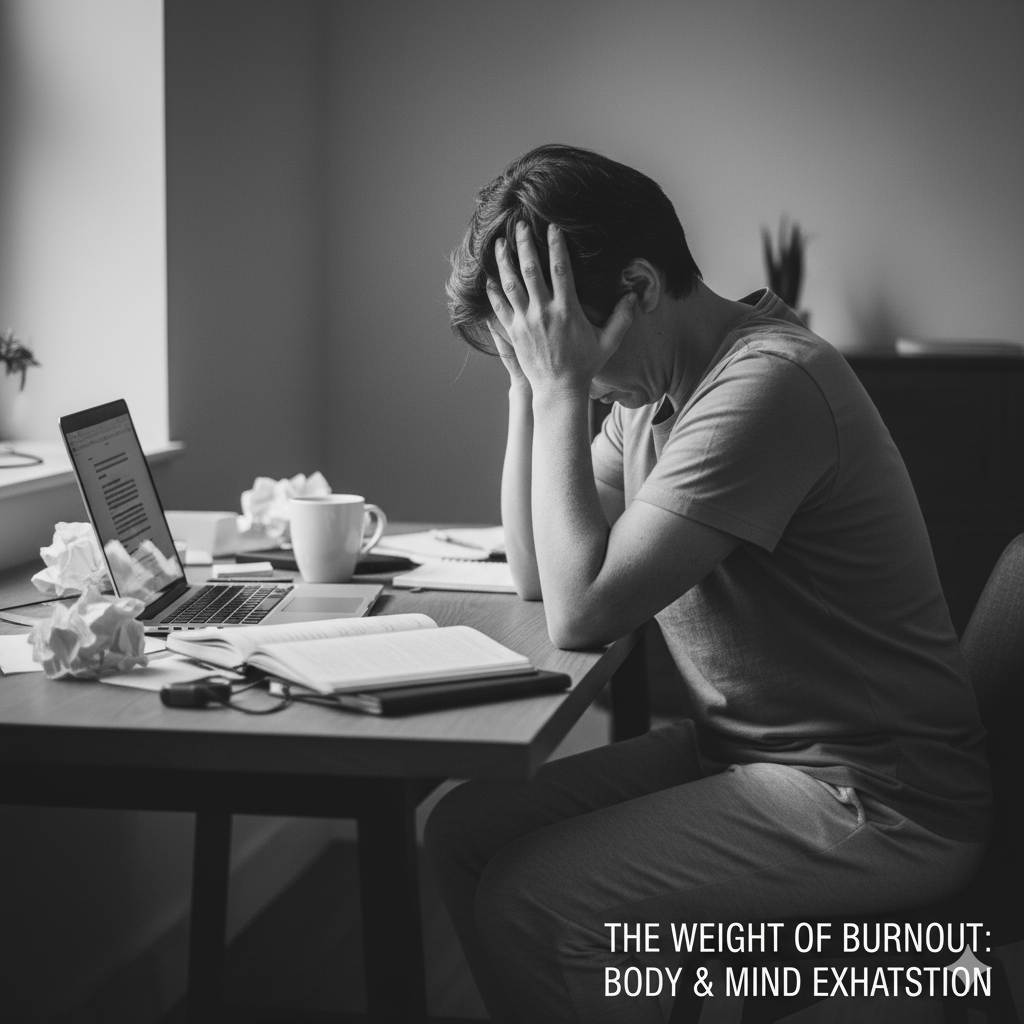
Chronically Low Cortisol – Burnout
Burnout has become so commonplace that it’s now classified as an official medical diagnosis by the World Health Organization. The symptoms are fatigue, lack of concentration, apathy, chronic stress, a lack of motivation, and inability to derive pleasure from activities that used to ignite fires.
In women, burnout typically arises when they’re juggling multiple roles. This is especially common in perimenopause. On top of work responsibilities, women are often the primary caregiver for children and aging parents, plus the family housekeeper, chauffeur, and social planner. Men still feel the pressure to be financial providers and protectors. So their burnout stems from trying to hold it all together without displaying “signs of weakness,” i.e., emotions.
To top it off, society tells us that burnout itself is a badge of honour. Listing off our to-do lists and stressing over how busy we are seems to be a rite of passage into adulthood. The truth is, no amount of dieting or exercise will undo the effects of burnout if you don’t get your stress under control. We all need to slow down, set boundaries, and prioritize well-being.
Reversing Burnout
Acknowledging your stressors is step one. They may not be the obvious things like work, finances, and kids. Stressors may be physical or emotional, and both take a toll on the body.
Physical stressors include illness, injury, aging, allergies, alcohol, sugar, caffeine, medications, environmental pollutants, chemicals, toxins, smoking, sedentary lifestyles, shift work, and so on.
Emotional stressors, on the other hand, can include trauma, grief, guilt, fear, anxiety, depression, loneliness, self-doubt, low self-esteem, and shame.
Both forms of stress can manifest as illness, or precursors to illness such as high blood pressure or elevated blood sugars. High levels of cortisol are only sustainable for a short period of time. People haven’t evolved to run from bears 24/7. Even if our adrenals could pump out that much cortisol, our receptors would wear out and stop functioning. How effective is it to nag your kids or partner every day? Eventually, they stop listening. This is similar to some of the processes behind burnout.
Here’s what typically happens to cortisol during burnout:
Early Stages of Stress
When you first encounter a stressful situation, cortisol levels rise to help you stay alert, energized, and focused.
Chronic Elevation
If the stress continues without sufficient time for you to rest or recover, constant high cortisol levels lead to physical symptoms like insomnia, weight gain (especially around the abdomen), weakened immune function, and digestive issues.
Exhaustion of the Stress Response
After a prolonged period of ongoing stress, the body reaches a point where it can no longer maintain those high cortisol levels. Cortisol production decreases, and you feel fatigue, apathy, or emotionally fragile. This is what naturopathic and functional medicine doctors refer to as adrenal fatigue.
Although this term isn’t officially recognized in medical literature, the feeling is very real for many people. When adrenal glands become overtaxed and can no longer produce adequate amounts of cortisol, you feel physically or mentally exhausted.
Symptoms of Low Cortisol or Burnout:
- Extreme fatigue/exhaustion
- Feeling burned out
- Depression
- No motivation/apathy
- Low libido
- Hair loss
- Weak immune system
- Hard time recovering
- Salt cravings
- Low blood sugar
- Dizziness
- Weight gain
If your stress isn’t going anywhere, you need to look at your response to stress. What are your outlets or coping strategies? We’ll talk about productive and unproductive outlets for stress in the solution chapters. Spoiler alert: stress eating is an unproductive response.