
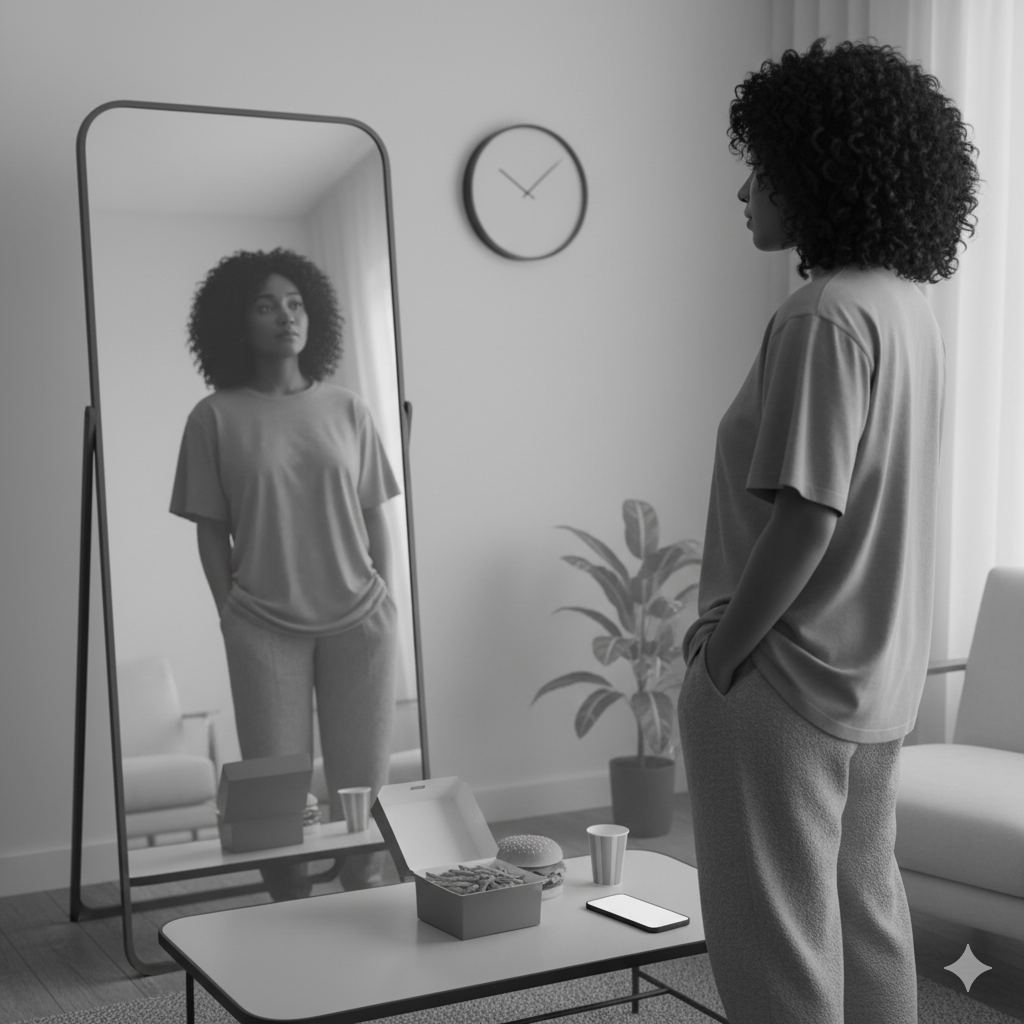
Why is there an obesity epidemic?
In spite of our 24/7 access to health information, and a billion-dollar weight loss industry, we are not losing weight, but gaining more. Why are we continuing to gain weight?
Answer: People are disconnected from their bodies.
Obesity Epidemic
In North America, we are facing an epidemic unlike anything seen in the history of humanity: 60% of Canadian adults are overweight. One in three are obese – more than 30 lbs over the healthy weight range. That’s up from one in five back in 2003. In 20 years, despite the many, many diet plans available, obesity has grown from 20% of adults to 30%. In another 20 years, will it be half? If we don’t start making the necessary changes, that answer will likely be yes.
What would that mean for our society?
Obesity is a chronic and progressive condition that puts people at risk of “over 200 weight-related health conditions” including heart disease, stroke, and Type 2 diabetes, as well as asthma, sleep apnea and an increased risk of various cancers. It also affects quality of life: people who are obese are more likely to experience sore joints, mobility challenges and may suffer from depression or anxiety. I’ve heard from various patients over the years, how their weight impacts both their physical and mental health. Of course, suffering from chronic pain, swollen joints and lack of mobility can be devastating when you are trying to keep up with your kids or grandkids, but what can be more devastating are the social impacts of never being in a picture with those kids or grandkids because you don’t like the way you look. The one behind the camera, instead of the one in the photo, for a lifetime of memories to cherish. Health
implications aside, missing out on hobbies or life events that are soul filling, can be one of the saddest things for me to hear and witness in my office as a doctor. How did we get here?
In children, adolescent or childhood obesity contributes to a lifetime of low self-esteem, and sets them up for a lifelong struggle with health implications, and a much higher chance of developing one or more chronic health conditions later in life. It’s as though they start swimming upstream so early in life. Globally, the rate of obesity amongst children was four times higher in 2022 than in 1990, increasing from 31 million to 159 million children. In Canada, 1/ 3 one in three children and adolescents are
overweight or obese.
It doesn’t just stop there. For our aging population, the results are heartbreaking and expensive: In 2023, obesity-related diseases forced 10,000 seniors to move into long-term care. I don’t need to tell you that living in long-term care isn’t on anybody’s wish list.
Another surprise nobody wants, is a diabetes diagnosis. Unfortunately, 10% of Canadians have it already (and 18% of seniors!). Most of these – 90% – have Type 2 which is one of the most preventable diseases, as blood-sugar levels are directly tied to diet and lifestyle. Another six million Canadians are pre- diabetic meaning that their blood sugar levels are at the cusp of Type 2 levels. This is a disease that reduces life expectancy by up to 15 years! It contributes to 40% of heart attacks and 30% of strokes. 90% of those with Type 2 diabetes are overweight or obese.
What Happened to Us?
It’s easy to point fingers at individuals, family members, schools, government or politicians. It’s easy to say that we are where we are because of something others are doing to us. Isn’t it easier to put the blame on external sources rather than looking inward at ourselves? “Fat-shaming” has become so popular, with people becoming keyboard warriors sitting behind a screen commenting on someone’s appearance they know nothing about. My bet is that the person doing the fat shaming, isn’t the picture
of health themselves. This makes me so furious. Not only have we become more overweight, we have also become more judgmental, less tolerant and more hurtful. We all have challenges and vices – weight just happens to be an easy target because it’s visible. In our grandparents’ generation, only one person in 100 was obese, so it made sense to ask what’s going on with that person. Now that it’s one in three, we need to ask what has changed across the board in just fifty years.
In my view, there are three factors responsible: the social glorification of food, time pressure, and addiction to convenience foods.